![Heritage & Kayu [ヘリテージエン・カユ]](http://images.squarespace-cdn.com/content/v1/690c9e2061970159c6f4ce03/c0ce3fd2-85ea-40e8-906e-c32ffda670cb/Heritage+Logo_Logo+Horizontal+PNG.png?format=1500w)
![Heritage & Kayu [ヘリテージエン・カユ]](http://images.squarespace-cdn.com/content/v1/690c9e2061970159c6f4ce03/9e65ee3c-d172-40a6-886b-1381df61f467/Heritage+Logo_Logo+Horizontal+PNG.png?format=1500w)
Indonesia’s Weaving Botanicals: (Brief) Introduction to Ketak
Ketak: What of It?
Ketak has long been woven into the everyday life of Lombok, yet its story stretches far beyond the island’s borders. What appears at first to be a simple natural fiber is, in fact, part of a larger ecological and cultural continuum that spans regions and histories. Exploring the plant’s wider biogeographic connections reveals how its presence links local craftsmanship to broader natural patterns across tropical Asia, where similar species have taken root and shaped material traditions. This wider lens helps illuminate not only Kayu Ketak’s botanical journey, but also the layered human narratives that grew alongside it; stories of adaptation, exchange, and inherited knowledge that continue to define its place in Lombok today.
At the same time, understanding this broader context invites reflection on how communities manage the delicate relationship between resource use and ecological care. The craft’s beauty and economic value are inseparable from the plant’s availability, and its continued presence depends on a careful balance that local harvesters and artisans navigate with intention. These themes; its continental echoes and the ongoing negotiation between tradition and sustainability frame the discussion that unfolds below.
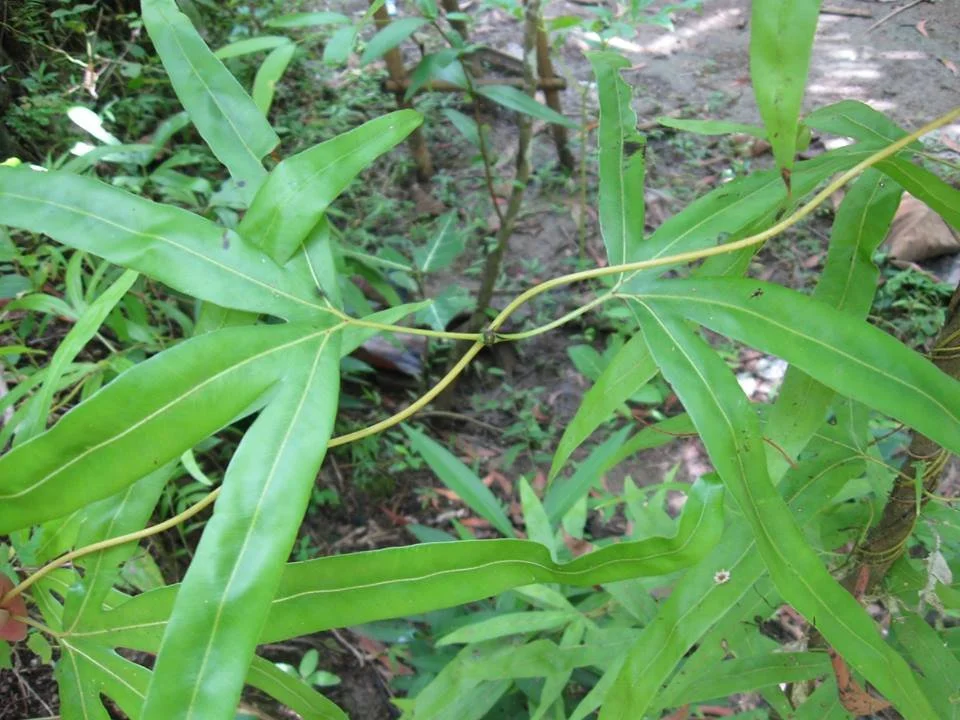
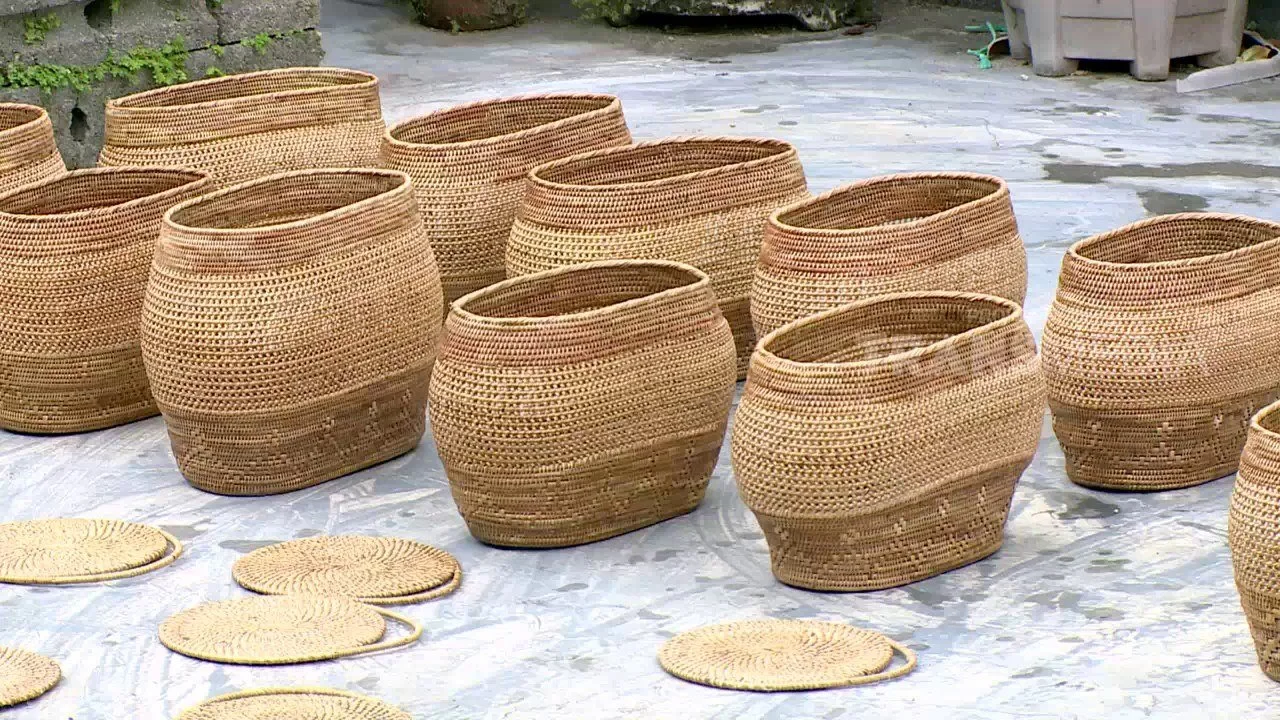
Lygodium circinnatum, a climbing fern widely recognized for its durable fibers and cultural medicinal significance.
A Name Rooted in Place, A Species Known Abroad
For many people, including Indonesians themselves, the word ketak is unfamiliar unless they come from communities where the plant plays a direct role in everyday life. As we note across our website, ketak is the local name in Lombok, derived from Sasak language for Lygodium circinnatum, a climbing fern recognized by botanists under several scientific synonyms, many of which are cataloged in the Kew Gardens Plants of the World Online database. In short, ketak is the vernacular identity of a species that has traveled widely through botanical literature.
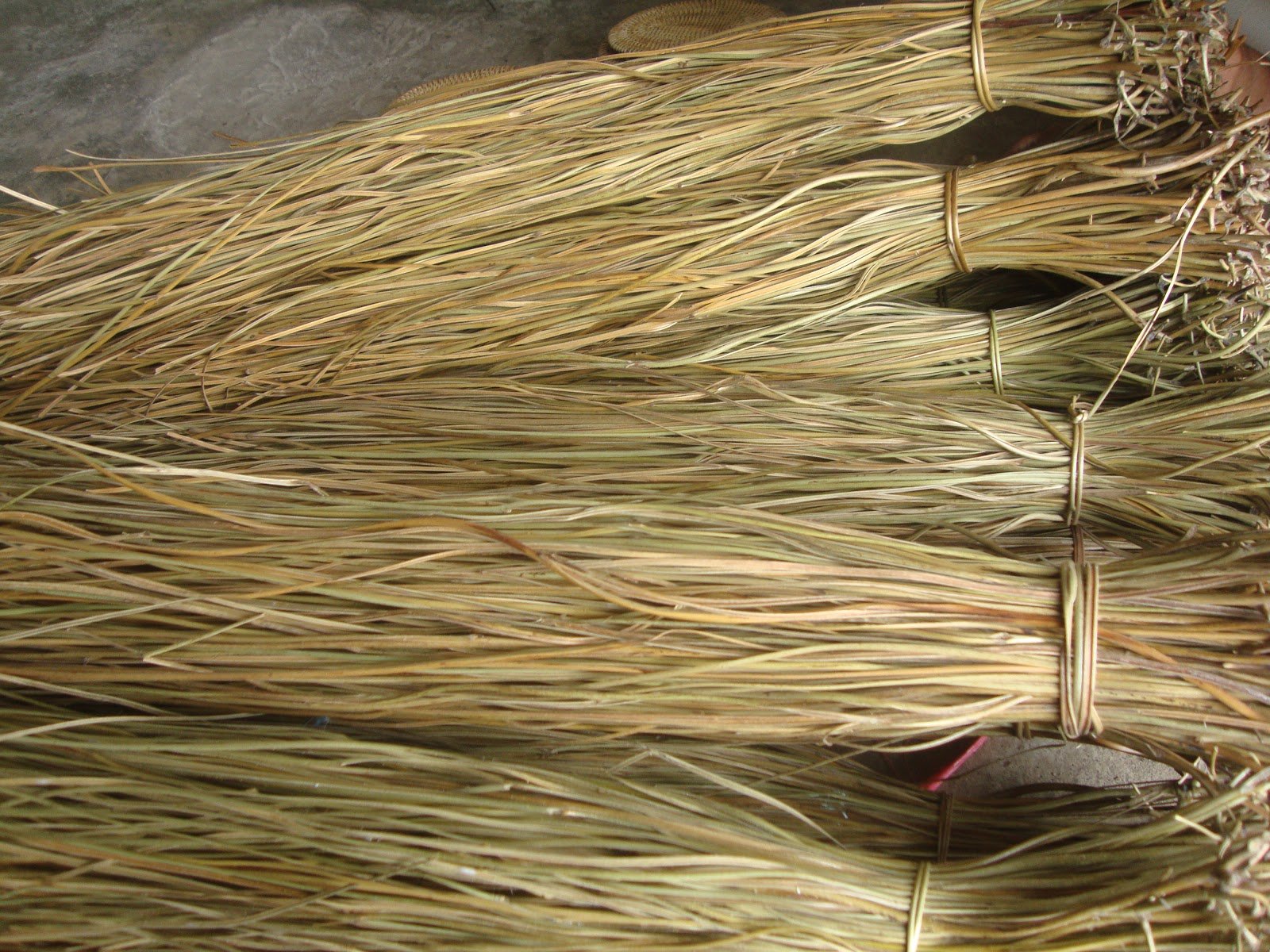
Although closely associated with Lombok today, L. circinnatum is not endemic to the island. Its native range stretches across tropical and subtropical Asia all the way to the Western Pacific. Wherever it grows, this forest fern, often overlooked in plant taxonomies, has long served practical, culinary, and medicinal purposes. Young leaves are eaten as vegetables in parts of Indonesia and Malaysia; the flexible, cord-like rachises are woven across Southeast Asia into hats, baskets, boxes, mats, and ties for rice sheaves. In the Philippines, the dried splints known as nito support a longstanding weaving tradition. Across the region, the plant’s different forms and uses reveal an intricate relationship between local ecologies and cultural practice.
A Plant With Stories Across a Continent
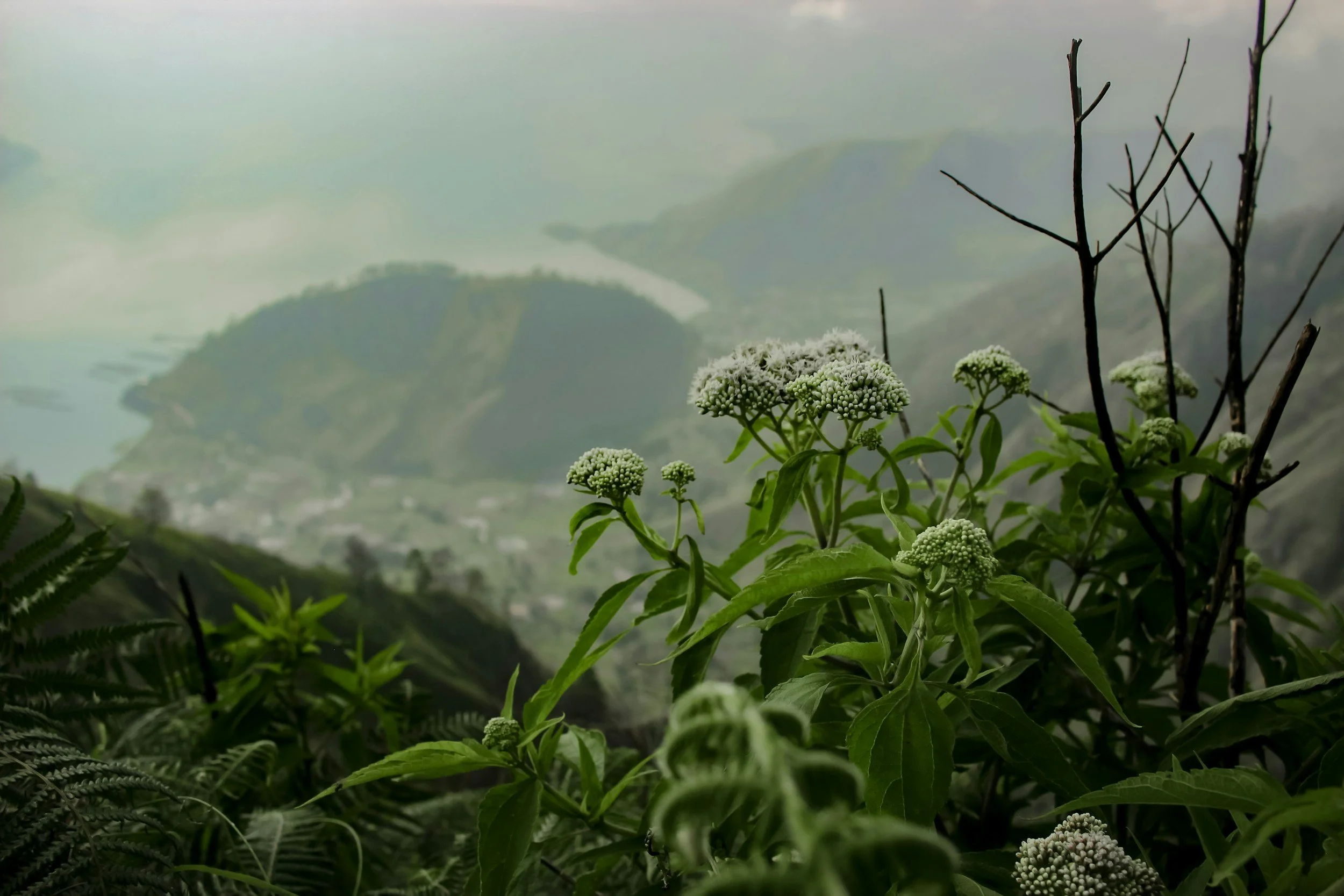
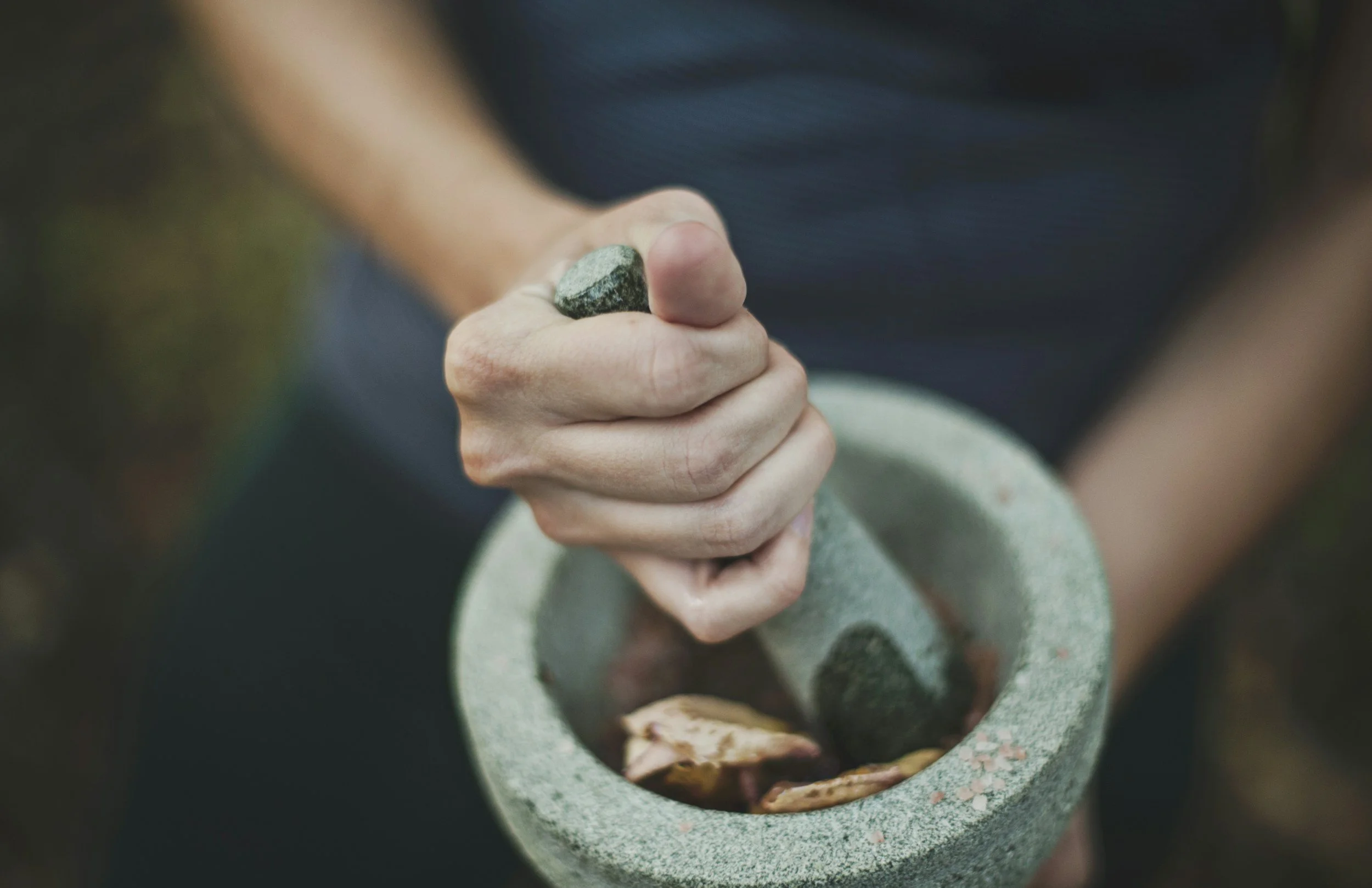
The widespread presence of Lygodium species has produced a mosaic of uses and meanings that vary from one community to another yet remain connected through shared ecological familiarity. In many parts of Indonesia, Malaysia, and the Philippines, the plant’s aerial parts, leaves, and roots figure prominently in traditional medicine. Treatments range from wound care and fever remedies to poultices for burns, insect bites, and skin complaints. Farther afield in Vietnam, Nepal, Papua New Guinea, Ivory Coast, and Colombia, related species appear in healing practices, rituals, and even hallucinogenic mixtures.
These varied applications reveal a broader story: communities across continents found utility and significance in the same resilient fern, transforming it into food, fiber, medicine, or ritual tool depending on local needs. Such parallels underscore that Lombok’s ketak craft is part of a wider regional heritage of working with Lygodium, an enduring conversation between human ingenuity and the material possibilities of the natural world.
Balancing Use and Conservation
In Lombok, where many of our partner artisans live and work, ketak remains a valued local commodity. The plant grows wild across the province of West Nusa Tenggara (NTB), one of Indonesia’s 38 provinces and part of what was once known alongside Bali and East Nusa Tenggara as the Lesser Sunda Islands. While the global tourism landscape has changed dramatically since those early geopolitical classifications, ketak craftsmanship remains a consistent thread across the region, with notable parallel traditions found in Bali and beyond.
Yet ketak’s importance also draws the attention of local forestry agencies. As demand increases, so does the responsibility to ensure that harvesting practices do not undermine the ecological balance of the landscapes where the plant thrives. Researchers and conservation practitioners emphasize the need for community-based cultivation and responsible foraging, particularly because L. circinnatum plays an important role in the structure and regeneration of local forests.
Balancing tradition, livelihood, and ecological resilience requires care and, increasingly, collaboration between artisans, harvesters, local authorities, and environmental researchers. The vibrancy of ketak craft depends on the vibrancy of the forests themselves.
Ketak: Craft, Ecology, and the Continuity of Local Knowledge
Looking closely at ketak reveals a material that is far more than a raw resource. It is a thread linking Lombok to a vast biogeographic region, a carrier of stories shared across cultures, and an anchor for traditions that persist through skill, memory, and ecological awareness. Its uses from weaving and cooking to medicine and ritual demonstrate the plant’s versatility, but also its embeddedness in the daily lives of communities from Southeast Asia to the Pacific.
As ketak grows in global recognition through contemporary craft and design, its future depends on how responsibly it is harvested and cultivated. Preserving the plant’s ecological role ensures that the knowledge surrounding it – knowledge shaped by generations of artisans and forest communities can continue to thrive. To honor ketak is to honor not only the craft, but also the land and the people who make its stories possible
Useful References
Cicuzza, Daniele. 2020. “Lygodium Circinnatum (Burm.f.) Sw. Lygodiaceae.” In Ethnobotany of the Mountain Regions of Southeast Asia, edited by F. Merlin Franco. Ethnobotany of Mountain Regions. Springer International Publishing. https://doi.org/10.1007/978-3-030-14116-5_64-1.
Cunningham, Anthony B., and Josef A. Brinckmann. 2023. “Smoke and Mirrors: The Global Trade in Fern (Lygodium Circinnatum) Fiber Basketry.” Economic Botany 77 (3): 243–66. https://doi.org/10.1007/s12231-023-09576-9.
“Lygodium Circinnatum - Useful Tropical Plants.” n.d. Accessed December 6, 2025. https://tropical.theferns.info/viewtropical.php?id=Lygodium%20circinnatum.
Plants of the World Online. n.d. “Lygodium Circinnatum (Burm.f.) Sw. | Plants of the World Online | Kew Science.” Accessed December 6, 2025. http://powo.science.kew.org/taxon/urn:lsid:ipni.org:names:17142820-1.
Winter, W. P. de, and V. B. Amoroso. 2003. Plant Resources of South-East Asia. Backhuys Publishers.https://edepot.wur.nl/411315.